June Orchard Care
June is spent mostly finishing off, and keeping track of the thinning that probably started in May, and spraying.
As I think I mentioned in the May Orchard Care page, regardless of how much fruit you are taking off the tree, there should be 6 to 8 inches between fruit on a branch. This is when the fruit are about a quarter in size, perhaps a little larger. Of course, as they swell, that distance will shrink, as much as 2 to 3 inches, and they will seem closer.
However, one can usually tell if the fruit are too close together.
June is a good time to decide which branches are going to need support. Here in middle TN we are subject to some pretty strong thunderstorms and as the fruit swell, the weight can become too much for the tree along with the wind, and the tree will break, or the limb will break off. I use 48″ fiberglass temporary electric fence posts (from Tractor Supply) that are easy to step into the ground as supports for smaller branches. I put a U shaped metal branch support that I purchase through Amazon on the top of the fiberglass post and recently started securing the branch in the metal holder with a rubber band.
Other than that, the month is spent spraying for insects and fungicide. Most of the insecticide chemicals I use are restricted products, most of the fungicides are not. Neither is cheap and if you only have a few trees, then it’s not worth the expense of purchasing quantities that will take you years to consume.
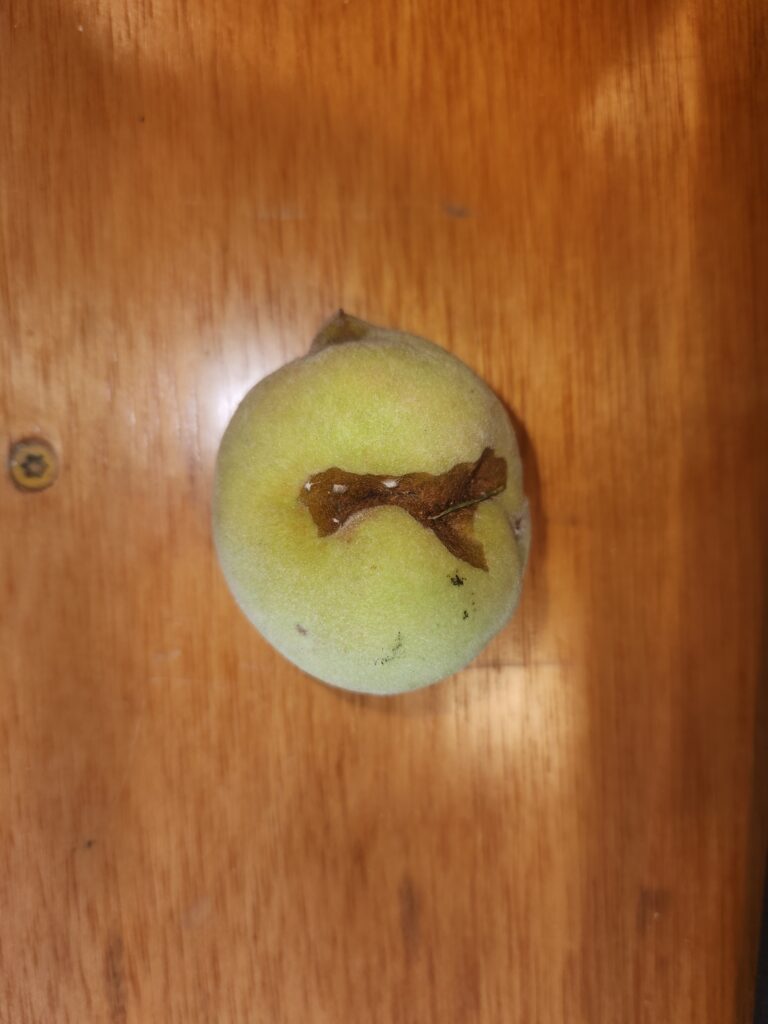
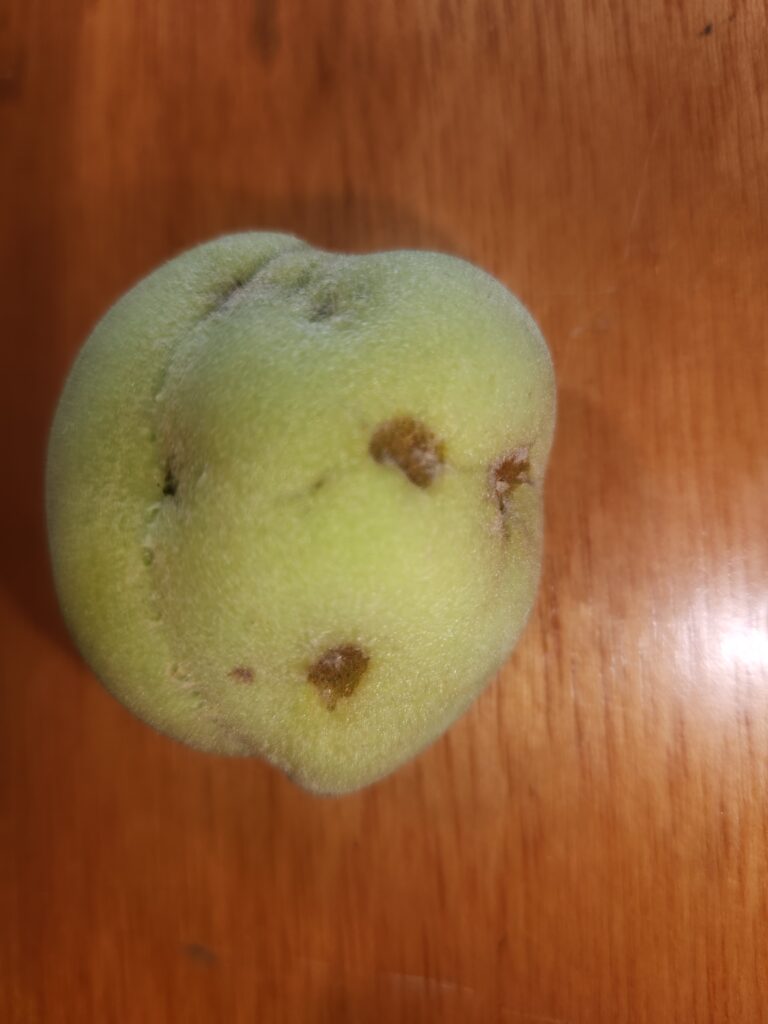
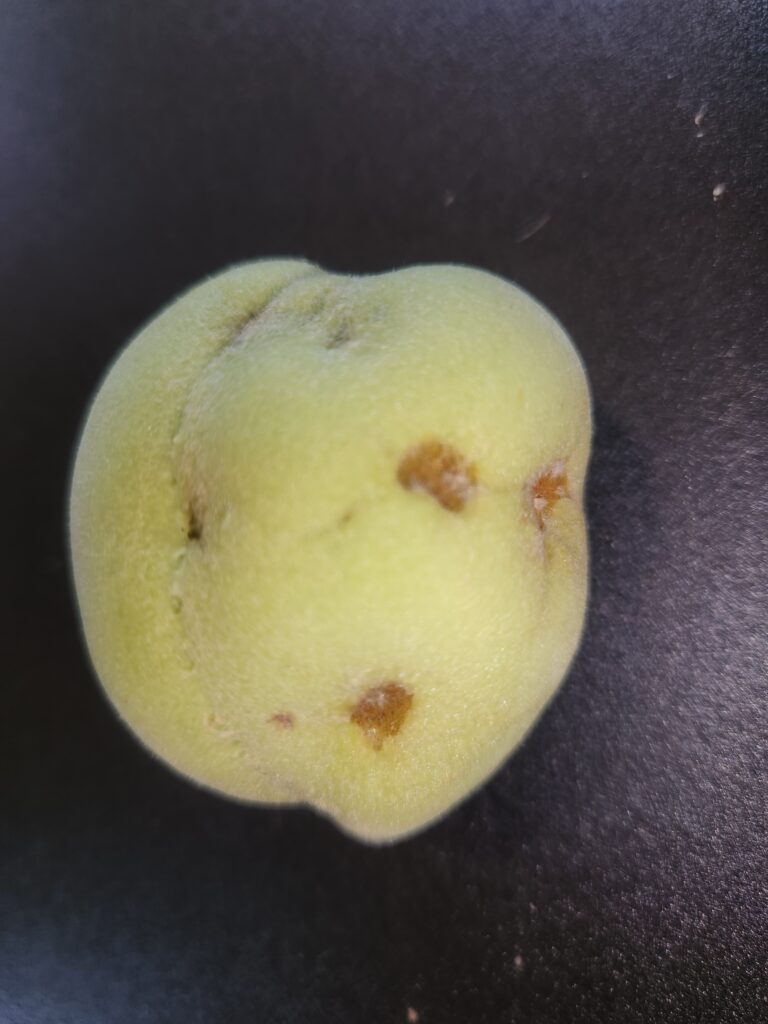
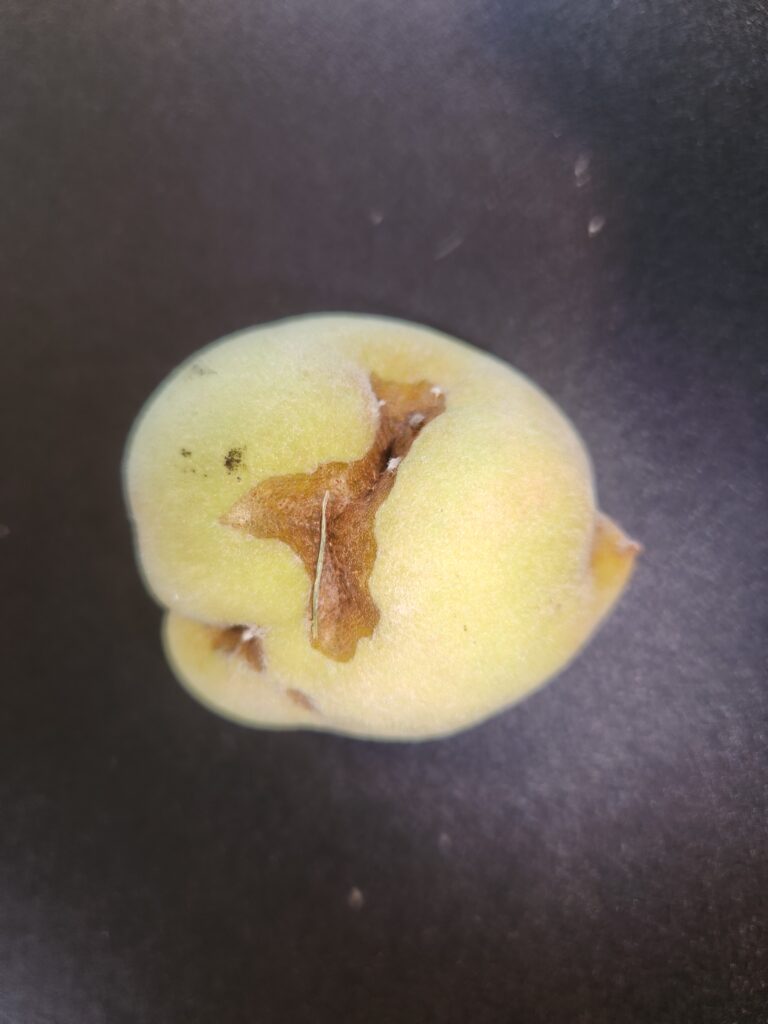
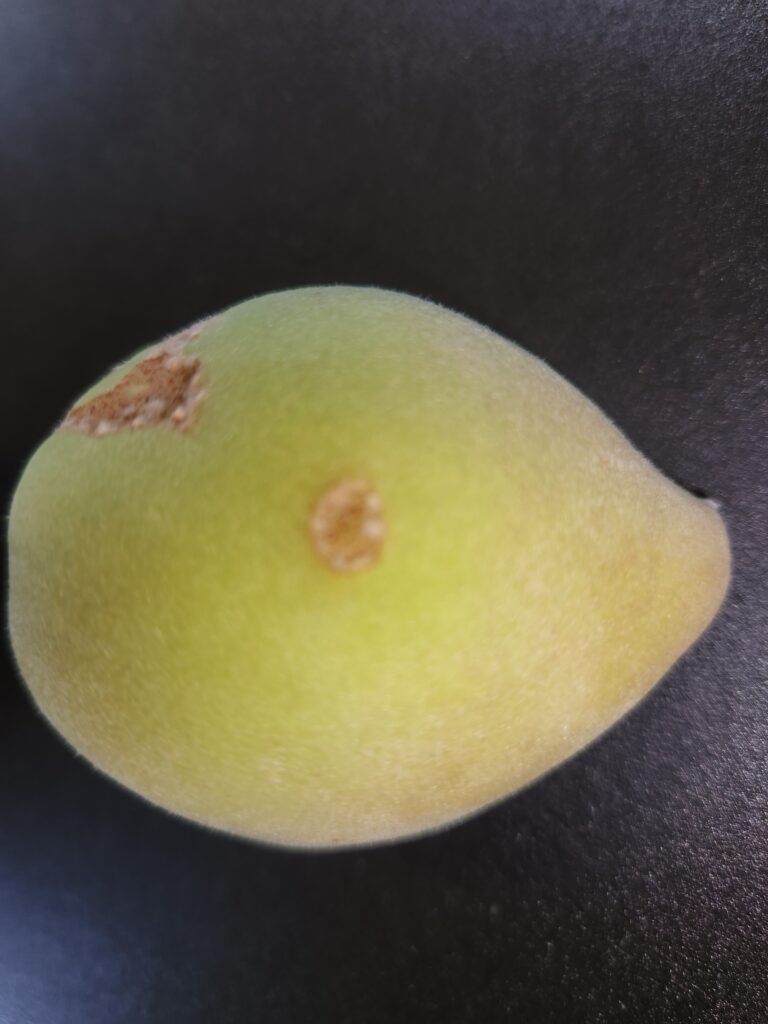
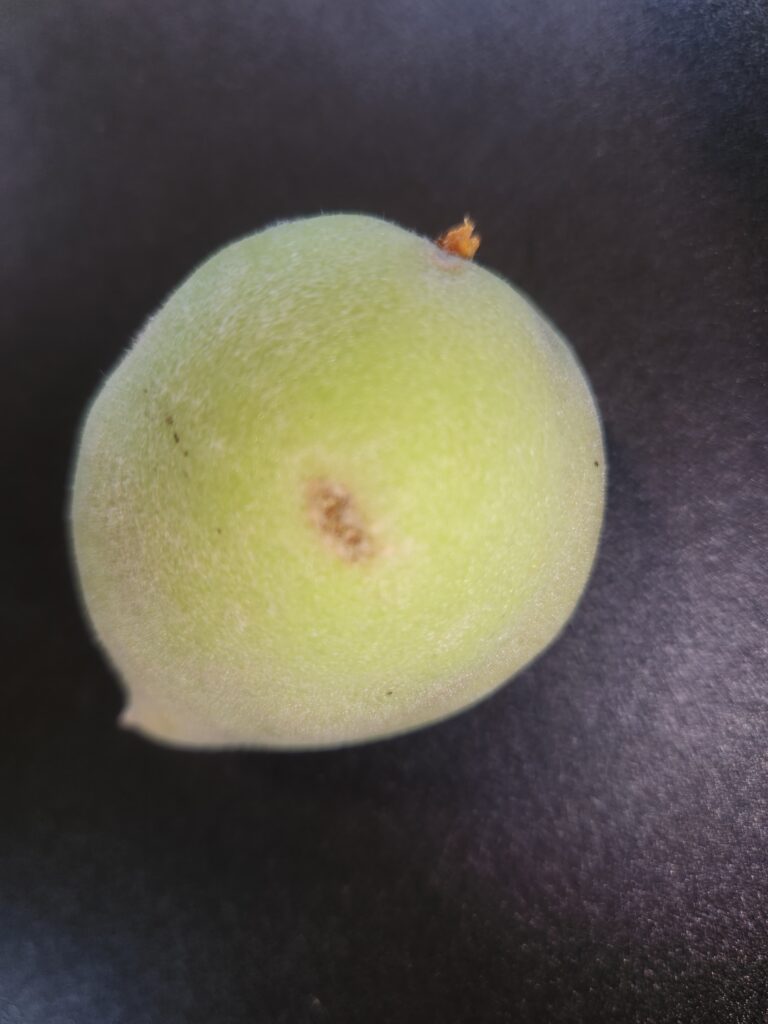
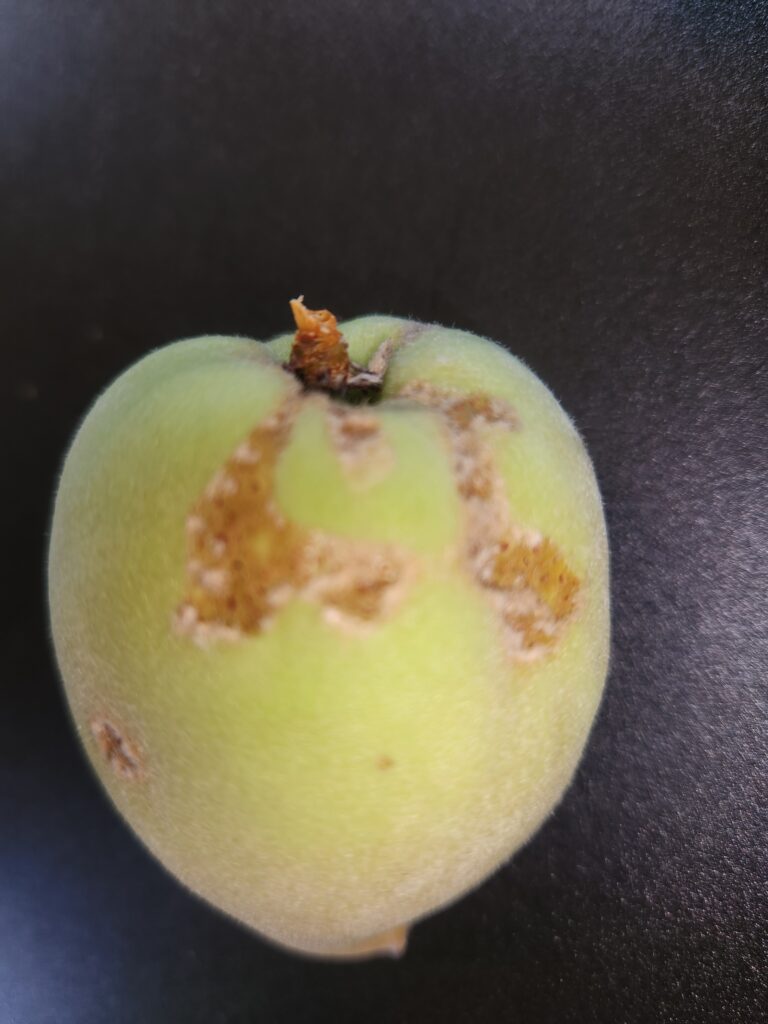
Tractor Supply, and probably your local coop, will have what you need. Tractor Supply has a combined insecticide-fungicide spray that I think could be quite useful although I have not used it myself. You need an insecticide that is going to be effective against plum curculio and stink bugs (here in TN), in particular, as they will cause a lot of damage. The plum curculio create a crescent shaped scar in the fruit in which they lay their eggs. The stink bugs, and some others, will suck the juice out of the fruit causing an indentation. I put a small gallery at the bottom of this page so you can see the type of damage. Both of these bugs can be controlled with Sevin and other off-the-shelf products from Bayer and others.
For fungus, the main problem is going to be brown rot, but there are others so in June you should be using a fungicide that targets brown rot and some of the others like shot hole.
Don’t forget to always use a surfactant which helps to spread and stick the product to the fruit.
Never spray anything on the tree before reading, and fully understanding, the label. The label is the law and will assist in preventing you from poisoning yourself, your neighbours, and also to get the best fruit you can from your efforts.
Also, bear in mind that a lot of these products, restricted or not, are harmful to bees so it is best to spray in the evening after sundown.
When you look at these images note that this is all old damage as indicated by the brown, dry appearance whereas recent damage will have some clear sap close to the scar. The scars are created initially as crescent shaped by plum curculio insects that cut into the fruit to lay their eggs. Other than the scarring the fruit will look a normal shape. The misshapen form is caused by a sucking insect, in my case here in middle TN, the marmorated stink bug is the worst offender. The peach in the first images has been attacked by both stink bugs and plum curculio. It’s a good idea to remove any spoiled fruit as early as possible.